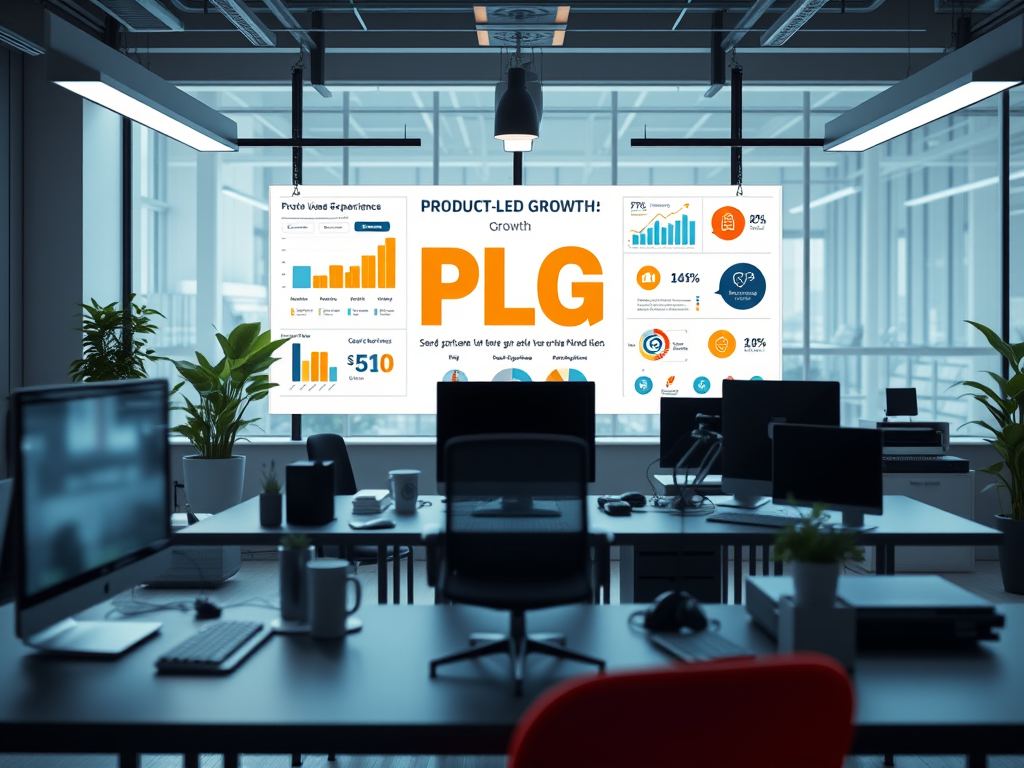
If you’re in SaaS and haven’t heard of Product-Led Growth (PLG), welcome to 2025—let’s get you caught up. PLG is the shiny new growth model everyone’s obsessing over, and for good reason. It’s not just a buzzword; it’s a powerful approach where the product itself becomes the primary driver of customer acquisition, conversion, and expansion. Gone are the days of aggressive cold calls and endless sales decks—your product is now the star of the show.
But here’s the kicker: PLG isn’t a magic bullet. To make it work, you need to integrate it thoughtfully into your Go-to-Market (GTM) strategy. That’s what this playbook is all about.
What Is Product-Led Growth (PLG)?
Let’s start with the basics. Product-Led Growth is a strategy where your product is the primary driver of growth. Instead of relying heavily on sales teams or expensive ad campaigns, you let users experience the value of your product directly, often through a freemium model, free trials, or self-service onboarding.
Key principles of PLG include:
- Value before payment: Users get to experience the product’s value before committing to purchase.
- Virality baked in: Happy users naturally share or refer the product.
- Bottom-up adoption: Instead of targeting executives, the strategy focuses on end users who champion the product internally.
Think Slack, Dropbox, or Zoom. These companies didn’t grow by brute-forcing sales—they let the product do the talking (or messaging, or conferencing).
Why PLG Matters for SaaS
Product-Led Growth is more than just a trend; it’s a response to changing buyer behavior. Here’s why it’s particularly relevant to SaaS:
1. Buyers Want to Try Before They Buy
Modern customers are allergic to long sales cycles. They want hands-on experience with a product before making a commitment. PLG caters perfectly to this demand by offering free trials, freemium tiers, or easy demos.
Today’s SaaS buyers, many of whom are Millennials or Gen Z, expect a frictionless buying process. They’ve grown up downloading apps, using them for free, and paying only when they see value. PLG aligns perfectly with this mindset.
2. Lower Acquisition Costs
In a traditional sales-led model, customer acquisition costs (CAC) can skyrocket due to heavy reliance on sales teams and paid advertising. PLG flips the script, enabling self-service adoption and reducing the need for expensive customer acquisition tactics.
When done right, PLG can create a self-sustaining growth loop: users sign up, experience value, and share the product with others—fueling organic growth that keeps CAC under control.
3. Built for Retention and Expansion
A well-executed PLG strategy doesn’t just acquire customers; it keeps them. By focusing on delivering value through the product itself, you can boost retention and drive upsells or cross-sells.
Take HubSpot, for example. Their free CRM is a gateway drug for users who eventually adopt their paid marketing and sales tools. This retention-driven approach ensures long-term revenue growth.
4. Scales Effortlessly
Unlike traditional models that often hit bottlenecks as they grow, PLG scales seamlessly. Why? Because users can self-onboard, adopt, and expand their use of the product without needing a proportional increase in human resources.
How PLG Fits Into Your SaaS GTM Strategy
Here’s the thing: PLG isn’t a replacement for traditional GTM models—it’s an enhancement. The key is knowing how to integrate PLG into your existing strategy without causing chaos.
1. Start with the Right Product
Not all SaaS products are a natural fit for PLG. Your product needs to deliver clear, immediate value to users without requiring hand-holding from a sales or support team.
Ask yourself:
- Can users easily understand and derive value from the product on their own?
- Does the product solve a specific, widespread pain point?
- Is there a clear “aha moment” that users can reach quickly?
If the answer to these questions is no, PLG might not be the best fit—yet. You may need to refine your product experience before diving into PLG.
2. Redefine Your Funnel
In a PLG GTM strategy, the traditional sales funnel gets a makeover:
- Awareness: Users discover your product through word of mouth, organic search, or viral features.
- Activation: Users sign up for a free trial or freemium tier.
- Adoption: Users experience the product’s value and hit key milestones (e.g., completing a task, inviting team members).
- Expansion: Free users convert to paying customers or upgrade to higher tiers.
- Advocacy: Happy users spread the word, fueling organic growth.
3. Align Teams Around PLG
PLG doesn’t mean firing your sales team or cutting marketing budgets. Instead, it requires a shift in roles:
- Marketing: Focuses on driving signups and promoting the product’s core features.
- Product: Becomes the central driver of growth, with a focus on onboarding, usability, and feature discovery.
- Sales: Moves to a consultative role, engaging with users who have already shown intent to upgrade or need enterprise-level support.
- Customer Success: Helps users derive maximum value from the product, reducing churn and driving expansion.
Key Tactics for Integrating PLG Into Your SaaS GTM Strategy
1. Offer a Freemium or Free Trial Model
This is the cornerstone of PLG. By lowering the barrier to entry, you make it easy for users to get started and experience the product’s value.
- Freemium: Great for products with widespread use cases and network effects (e.g., Dropbox, Slack).
- Free Trial: Ideal for products with a steep learning curve or high-value features that aren’t immediately apparent.
Pro Tip: Freemium works best when there’s a natural incentive for users to upgrade, like hitting usage limits or requiring premium features.
2. Nail the Onboarding Experience
First impressions matter—especially in PLG. Your onboarding process should guide users to their “aha moment” as quickly as possible.
Pro Tip: Use tools like Appcues or WalkMe to create in-app guides and tutorials that help users navigate the product.
The onboarding experience should:
- Highlight key features.
- Encourage engagement (e.g., completing a task or inviting teammates).
- Provide contextual support, such as chatbots or help docs.
3. Leverage Data for Personalization
In PLG, data is your best friend. Use product analytics tools like Mixpanel or Amplitude to track user behavior and identify where users drop off in the onboarding process. Then, use this data to create personalized experiences that re-engage users.
For example, if a user hasn’t completed a key onboarding step, trigger an email or in-app notification to guide them.
4. Incentivize Virality
The best PLG products have virality baked in. This doesn’t mean slapping a “share with friends” button on your app and calling it a day. Instead, think about how users naturally interact with others while using your product.
Examples:
- Slack encourages users to invite team members.
- Zoom users need to invite others to host meetings.
- Calendly makes it easy to share booking links.
5. Focus on Product-Led Sales
In a PLG strategy, sales doesn’t disappear—it evolves. Product-led sales teams focus on engaging users who are already showing intent to upgrade or need additional support.
For example:
- A free user who invites 10+ team members might trigger an outreach from sales to discuss a team plan.
- Enterprise prospects exploring advanced features might be flagged for a personalized demo.
Real-World Examples of PLG in Action
Example 1: Slack
Slack’s entire growth strategy revolves around PLG. They offer a freemium tier that allows teams to experience the product’s value without committing to a paid plan. Once teams grow and need advanced features like more integrations or higher storage limits, they naturally upgrade.
Example 2: Zoom
Zoom’s simplicity and freemium model made it a poster child for PLG. By offering unlimited one-on-one meetings for free, they captured a massive audience. Upgrades to paid plans were driven by limits on group meetings, creating a seamless path to monetization.
Example 3: Notion
Notion’s PLG strategy focuses on individual users who champion the product within their teams. Their freemium tier lets users create personal workspaces, which often evolve into team-wide adoption as the product’s collaborative features shine.
Example 4: Canva
Canva hooks users with its free design tools, which are powerful enough for most individual needs. Once businesses realize the value, they upgrade to Canva Pro for premium templates, brand kits, and team collaboration features.
Challenges of Implementing PLG
While PLG is undeniably powerful, it’s not without its challenges.
1. High Upfront Costs
Building a product that can sell itself requires significant investment in development, onboarding, and analytics.
2. Retention Is Critical
PLG success hinges on users sticking around. If your product doesn’t deliver ongoing value, users will churn faster than they sign up.
3. Balancing Free and Paid Features
Finding the right balance between free and paid features is tricky. Give away too much, and you won’t convert users. Hold back too much, and free users won’t see the value.
Metrics That Matter in a PLG Strategy
To measure the success of your PLG GTM strategy, track these key metrics:
- Product Qualified Leads (PQLs): Users who have demonstrated intent to upgrade based on their behavior.
- Time to Value (TTV): How quickly users reach their “aha moment.”
- Net Dollar Retention (NDR): The percentage of recurring revenue retained, including upsells and expansions.
- Free-to-Paid Conversion Rate: The percentage of free users who convert to paying customers.
Wrap Up
Product-Led Growth is more than a trendy buzzword—it’s a transformative approach to SaaS growth that puts the product at the center of your GTM strategy. By integrating PLG into your playbook, you can reduce acquisition costs, boost retention, and create a scalable growth engine. But remember, success doesn’t happen overnight. It takes careful planning, cross-team alignment, and relentless focus on delivering value through your product.
Want to learn more? DM on LinkedIn or book a time to talk live!
 KRP Consulting